Gravel for Garden Beds and Borders
The best gravel for garden beds is a small stone such as grit, 3/8 in chippings or pea gravel. Spread it 2 to 3 in (5 to 7.5 cm) deep, keep it back from plant stems, and lay no fabric under it in a permanent bed. It suits alpines, succulents and ground where nothing grows. Landscape rock is the wider family of loose decorative stone, from grit to cobbles, and gravel is one kind of it.
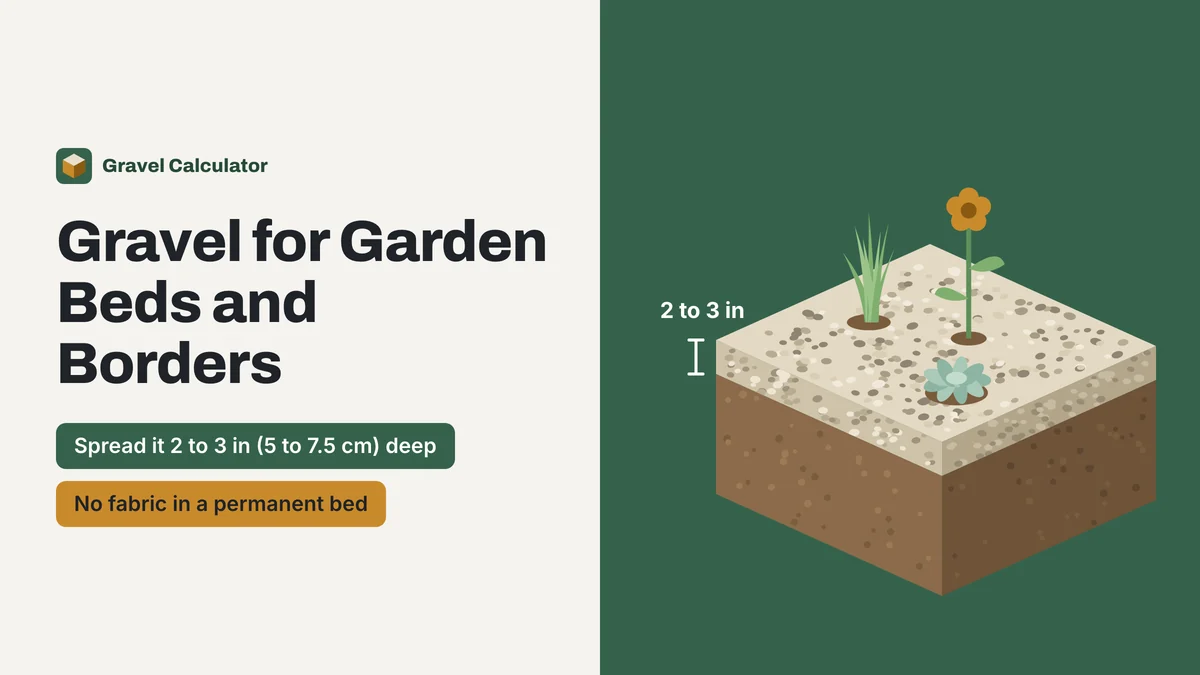
Table of Contents
Best landscape rock for flower beds
Match the stone to the spot, and keep organic mulch at the base of most plants. In a mixed border, New Mexico State University (NMSU) puts organic mulch around plant bases and rock farther out. So in most beds, gravel fills the open ground between plants rather than hugging them. A Colorado extension horticulturist goes further and generally advises against rock mulch in beds, except pea gravel around succulent and dry-climate (xeric) plants.

| Garden spot | Stone to use | Why |
|---|---|---|
| Mixed bed of perennials and shrubs | organic mulch at the stems, gravel farther out | most plants benefit from organic mulch at their base (NMSU) |
| Alpines, rock garden, gravel garden | grit or fine gravel over the soil | keeps alpine leaves off damp ground (RHS) |
| Succulents and xeric plants | pea gravel | the one rock mulch the Colorado horticulturist allows in beds |
| Under a downspout | rock or cobbles | wood mulch floats away there (NMSU) |
| Steep bank | larger rock or cobbles | NMSU suggests larger rocks or cobbles on steep slopes; K-State warns rock slides and bares the fabric |
| Path or bare ground you walk on | small crushed stone, or pea gravel over a compacted base | rock is the preferred mulch where nothing grows (Colorado extension) |
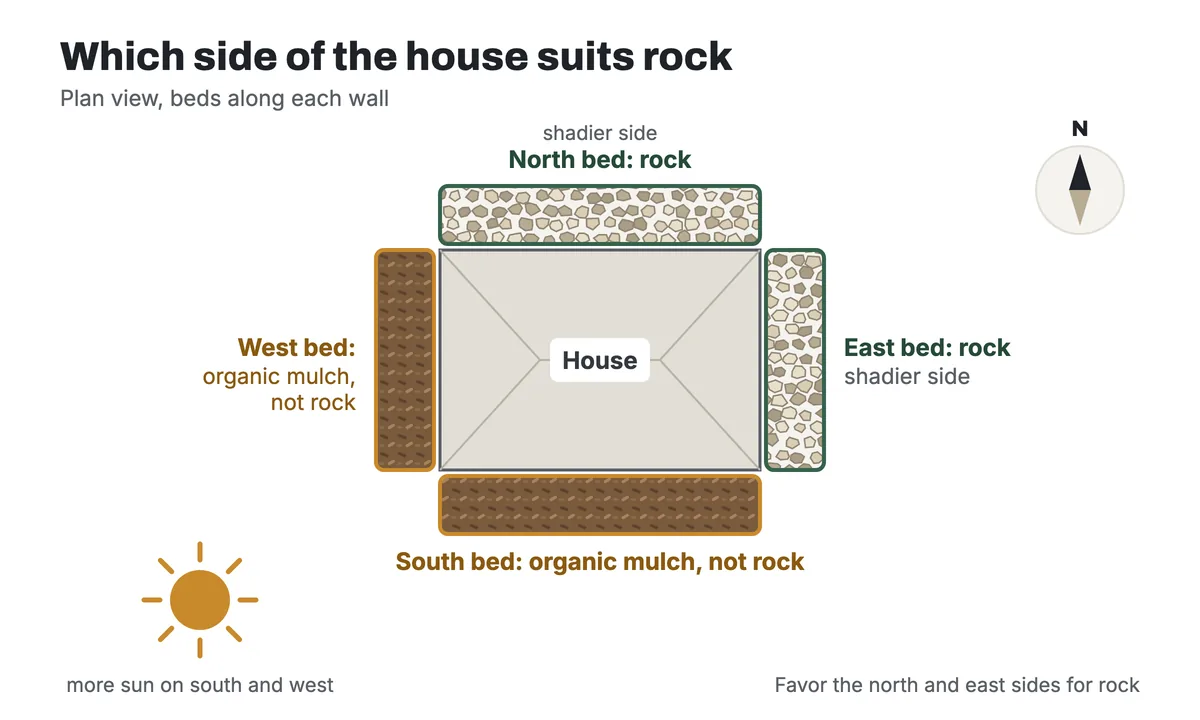
| Bed against a south or west wall | organic mulch, not rock | rock belongs on the shadier north and east sides (CSU Extension) |
That xeric exception, pea gravel, is sold in UK yards as pea shingle. Rock stays put under a downspout, but water pooling against the foundation is a drainage job. Once you have picked the stone, the gravel calculator turns your bed's length, width and depth into an order.
What is landscape rock
Landscape rock is loose stone spread over garden ground rather than built on, from fine grit up to cobbles. The RHS lists slate, shingle, pebbles, gravel and stone chippings as mulches laid across beds. Besides gravel, the yard will offer river rock, which is stone worn smooth and rounded by water. Lava rock is a light volcanic cinder full of gas holes, and decomposed granite (DG) is another common choice.
A rock garden, or rockery, uses rocks, stones and gravel as its frame, while a scree garden uses looser, smaller stones. UK gardeners say border for a bed and membrane for landscape fabric. The wider range of quarried and natural stone is covered under types of gravel and crushed stone.
Where to put rock in the garden
Rock in a planting bed may raise the water plants need, Colorado extension advice from El Paso County warns, so keep it away from thirsty ones. Where you do use it, CSU Extension advice is to favor the north and east sides of the house over the south and west.
How deep to lay gravel for garden borders
Lay gravel for garden borders and beds at least 2 in deep, and 3 in where you can. Those are the two figures in the RHS advice on mulches, which names gravel among them. Thinner than that, the RHS warns, the stone mixes into the soil below and lets surface weeds in.
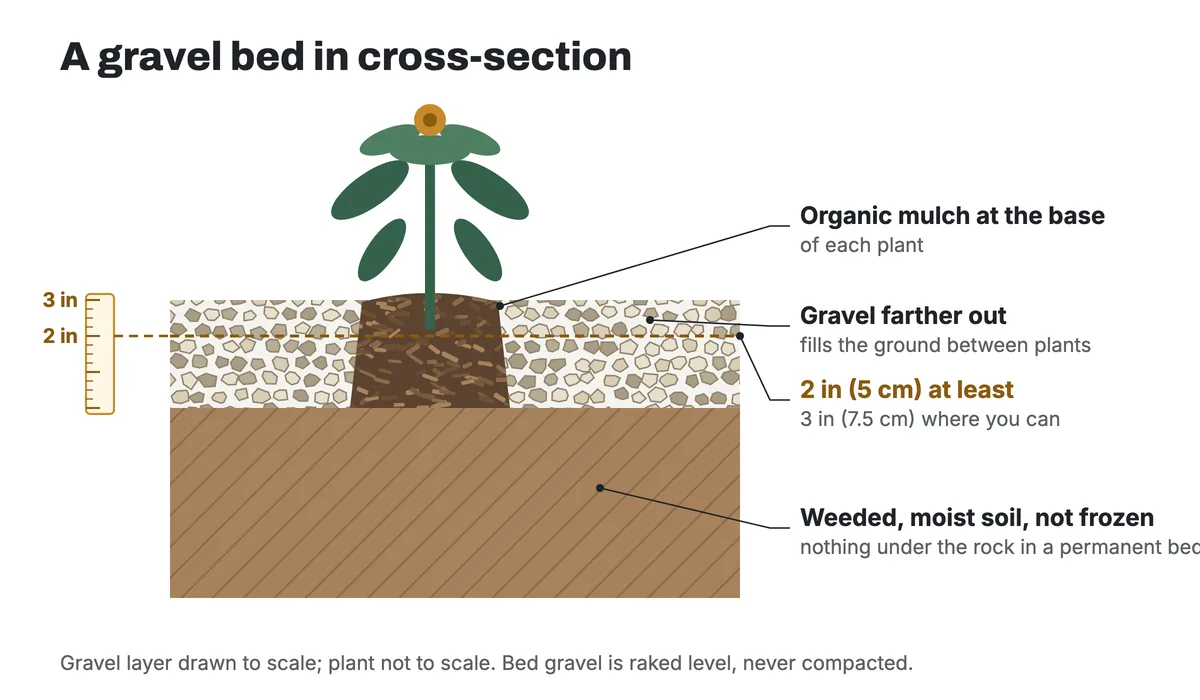
Depth also has to suit the stone. Fine grit and 3/8 in chippings cover the soil well at 2 in. Large 2 in river rock needs about 4 in (10 cm), a layer two stones deep. The sizes behind those names are on the gravel size chart.
Gravel holds down weeds and keeps moisture in, but the RHS notes it adds no fertility or structure to the soil. Dig in any compost before the stone goes down, since adding it later means raking the gravel aside. Pull weeds first, then spread the stone over moist soil that is not frozen. Rake it level and stop there, because bed gravel is never compacted. A path that carries steady foot traffic is a different build, with a compacted sub-base under the surface stone.
What to put under landscape rock
In a permanent bed, put nothing under the rock. CSU Extension also says weeds grow in rock with or without fabric, because wind and birds drop dust and seed on top.
Linda Chalker-Scott, an extension horticulturist at Washington State University (WSU), finds more problems with fabric. Her WSU landscape fabric fact sheet says it can break down in as little as one year where sunlight reaches it. That happens wherever the stone is thin or kicked aside. Weeds end up growing on and through the sheet. Plant roots grow into it too, and tear when it is pulled up. The Colorado horticulturist adds that silt and soil clog the pores, so the barrier can end up keeping water away from roots.
WSU sees a place for fabric in annual beds and ground that is dug often, where the sheet can be replaced. For a new bed or border, the RHS suggests woven fabric with slits cut to plant through, hidden under gravel. Keep soil and bark off the sheet, since WSU says organic matter on fabric speeds weed growth.
Living with rock you already have
Where plants struggle in old rock over fabric, rake the stone back from each one. The same El Paso County advice is to cut the fabric hole wider so the roots have room. Rake fallen leaves off as they land, because K-State says leaves left on gravel break into fine bits that silt it up and feed weeds. Pull weeds by hand, since K-State says a hoe is useless in rock. Before you add more, note K-State's warning that rock is easier to install than to remove.
How much stone a garden bed takes
A bed 26 ft long and 4 ft wide, spread 2 in deep, takes 0.64 cu yd (0.49 m3) of stone. That is about 0.83 tons of pea gravel or river rock at the site's estimate of 1.30 tons per cubic yard. Going to 3 in adds half as much again. Bed stone is never compacted, so add nothing for packing, only about 10% spare.

FAQ
Should you put gravel in the bottom of pots?
No. Water stays in the finer potting mix above a gravel layer until that mix is saturated, so the layer leaves a wet zone sitting over it. WSU says drainage material in a container only hinders water movement; drainage holes do the job. Gravel belongs on top of the pot instead, where alpines like a grit mulch.
Can you put landscape rock over mulch?
No, rock over mulch works against you. K-State says organic debris that breaks down in gravel speeds silting and weed growth, and a bark layer under the stone breaks down the same way. Lay the two side by side instead: organic mulch around the plants, rock farther out.
Is landscape rock better than mulch?
For planting beds, usually not. The Colorado horticulturist suggests wood mulch 2 to 4 in thick, kept 6 in from stems, for most of the landscape. Rock wins on bare ground, in dry gardens, and where wood would blow or float away.
Does gravel deter slugs?
Not reliably. The RHS says many slug barriers, rough or sharp mulches among them, have no scientific evidence that they work. Choose gravel for drainage and dry foliage, not as slug control.
Will limestone chips raise soil pH?
Slowly. A University of Nebraska lesson on agricultural limestone rates lime coarser than about 0.09 in at only 10 percent effective. A 3/8 in chip is about four times that size. Near acid-loving plants, ask the yard what rock the chips are.
Conclusion
Lay rock where it beats wood mulch: bare ground, dry gardens and the north or east side of the house, away from thirsty plants. Order that area at the depth its stone needs, with about 10% spare and nothing for packing. Before you pick a load size, check the area a ton of gravel covers at that depth.